
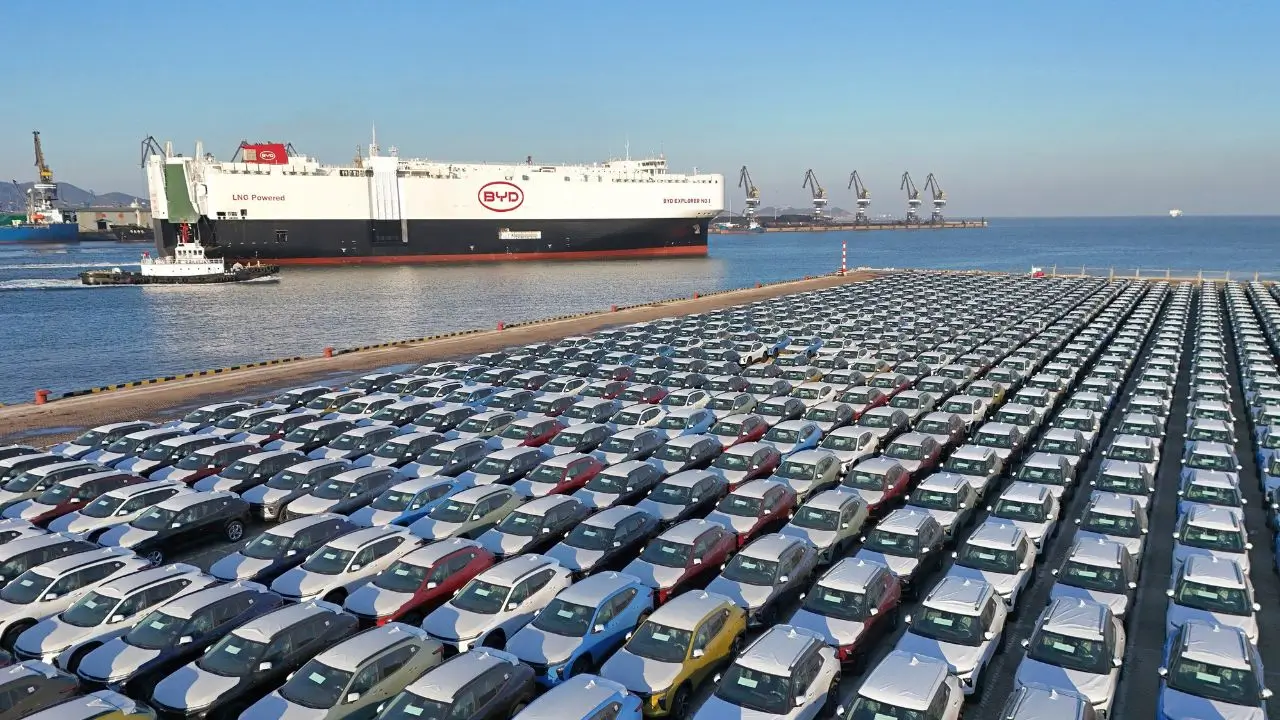
Canada has taken a bold and closely watched step in global trade policy by officially opening its electric vehicle (EV) market to China starting January 22, 2026. The move marks a significant change in Canada’s approach toward Chinese-made EVs and is already being viewed as a potential turning point for the international electric vehicle supply chain. Industry experts say the decision could have wide-ranging implications not only for Canada’s auto market, but also for trade relations involving the United States and other Western economies.
A Historic Policy Shift by Canada
Under the new policy, Canada has sharply reduced tariffs on Chinese electric vehicles, cutting them from a previously prohibitive level to a much more accessible rate. This change allows a limited but meaningful number of Chinese-made EVs to enter the Canadian market each year. According to reports, the initial quota allows tens of thousands of vehicles annually, with the possibility of expansion over time .
The decision is part of a broader effort by Canada to rebalance trade relations with China after years of strained ties. In return for easing EV restrictions, China has also agreed to reduce tariffs on key Canadian agricultural exports, including canola, signaling a wider economic reset between the two countries .
Why This Matters for the EV Market
Canada’s move comes at a time when Chinese automakers are widely regarded as global leaders in EV technology, battery efficiency, and cost control. By opening its doors, Canada could soon see more affordable electric vehicles entering the market—something that has been a challenge as EV prices remain high amid inflation.
Analysts believe this decision could increase competition in Canada’s EV segment, potentially pushing prices down and accelerating EV adoption. Chinese brands are known for offering long range, advanced technology, and competitive pricing, which could appeal strongly to Canadian consumers looking for affordable alternatives .

Which Companies Could Benefit
While much of the attention is on Chinese automakers such as BYD, NIO, and XPeng, the trade opening may also benefit unexpected players. One of the companies analysts are closely watching is Tesla. Tesla already manufactures several models in China and exports them globally. With lower tariffs in Canada, Chinese-built Tesla vehicles could become more competitive in pricing, giving the company an early advantage .
At the same time, major Chinese EV brands are reportedly evaluating the Canadian market carefully. While no official launch announcements have been made yet, industry sources suggest that several manufacturers are studying regulatory requirements, charging infrastructure, and consumer demand before making final decisions .
Political Pushback and Domestic Concerns
The policy shift has not been without controversy inside Canada. Some provincial leaders and labor groups have expressed concerns that an influx of Chinese EVs could hurt domestic manufacturing and jobs. Ontario officials, in particular, have urged caution, arguing that Canada should prioritize protecting its auto industry as it transitions to electric vehicles .


There are also geopolitical considerations. The United States has taken a much tougher stance on Chinese EV imports, maintaining high tariffs and strict trade barriers. Canada’s decision could create friction with its closest ally, as U.S. policymakers worry about Chinese vehicles entering North America through Canada, even if indirectly.
The Role of the United States
Canada’s EV trade opening puts it in a delicate position between two global powers. While Canadian officials emphasize that the policy is about diversification and affordability, critics argue it may complicate North American trade alignment. Some U.S. analysts see the move as a challenge to coordinated Western efforts to limit China’s dominance in EV manufacturing and battery supply chains .

However, Canadian policymakers counter that refusing access to lower-cost EVs could slow climate goals and keep electric vehicles out of reach for many consumers. They argue that competition is essential to achieving mass EV adoption.
A Broader Global Trend
Experts say Canada’s decision reflects a larger global trend acknowledging China’s leadership in EV technology and production. Countries across Asia, Europe, and Latin America are increasingly importing Chinese electric vehicles to meet emissions targets and consumer demand. Canada’s move signals a willingness to adapt to this reality rather than resist it.
By opening its market, Canada may also strengthen its position in global EV supply chains, gaining access to batteries, components, and manufacturing partnerships that could support its long-term clean energy transition.
What Happens Next
As of now, the policy is officially in effect, but its real impact will unfold over the coming months. Much depends on whether Chinese automakers commit to entering the Canadian market and how consumers respond. Pricing, charging compatibility, and after-sales support will be key factors.
What is clear is that Canada’s decision to open EV trade with China is more than a simple tariff change. It represents a strategic shift that could influence EV pricing, global supply chains, and geopolitical dynamics well beyond 2026.